

Lymphatic Support: Herbs to Keep Your Body's River Flowing

Your lymphatic system may not get much credit, but it's working around the clock. Think of it like a river that never stops moving through your body, carrying immune cells where they're needed and clearing out what your cells no longer want. But there's a catch.
Unlike your circulatory system, the lymphatic system doesn't have a heart pumping it along. It relies on you. Muscle movement and breathing create the pressure that keeps it flowing.
Sit still too long, at a desk or on a plane, and that river slows to a trickle. Things back up. You feel puffy, sluggish, or like your immune system isn't keeping up, and it's easy to blame the system.
Luckily, a handful of herbs have been used for generations to support lymphatic drainage and keep that river moving. That's the idea behind WishGarden Herbs' Lymph Mover tincture, a formula designed to support the optimal health and function of this system.
Why Lymph Mover Is Built Different
Why isn't Lymph Mover alcohol-free?
It's a fair question, especially with more alcohol-free herbal products on the market lately. Alcohol-free extraction genuinely has its strengths; water and glycerin do a great job pulling water-soluble minerals, mucilage, and polysaccharides out of a plant, and for some herbs, that's exactly the profile you want.
But it isn't the right approach for this formula. Lymph Mover relies on herbs like Red Root and Baptisia, whose traditional lymphatic and immune reputations come largely from alkaloid and resin-based constituents, compounds that need alcohol to fully extract. Skip the alcohol, and you'd be leaving the exact compounds this formula is built around behind. Here's why we build every formula, Lymph Mover included, around a tri-solvent process instead.
Why Tri-Solvent Extraction Captures More of the Plant
A plant doesn't keep all its beneficial compounds in one form. Some, like minerals, mucilage, and certain polysaccharides, dissolve readily in water. Others, like resins, alkaloids, and volatile oils, only release into alcohol. A single-solvent extract, water-only or alcohol-only, is built to capture one side of that equation and leave the other behind.
That's the case for using three solvents together instead of one. Alcohol pulls the broadest range of plant constituents on its own: resins, alkaloids, terpenes, and other alcohol-soluble compounds, while helping naturally preserve the tincture. Water draws out minerals, mucilage, and polysaccharides that alcohol alone can't reach. Glycerin adds a further layer, helping extract flavonoids and glycosides while smoothing the tincture's taste. Used together, the three solvents cover far more of a plant's chemistry than any one of them could alone.
That fuller extraction is also part of why liquid tinctures tend to feel fast-acting. Because the plant's compounds are already dissolved rather than locked inside a capsule or tablet, they don't need to break down before your body can use them. Taken sublingually, that can mean compounds reaching the bloodstream in as little as 15 to 30 minutes, well before a solid dosage form would even finish dissolving.
It's the same reasoning behind every WishGarden tincture, including Lymph Mover: build the extraction around getting the whole plant into the bottle, not just the part that's easiest to pull out.
What Your Lymphatic System Actually Does
Your lymphatic system is a network of vessels, lymph nodes, and tissue running alongside your bloodstream. It's quietly doing a job most people never think about until something feels off. It has three jobs it never clocks out from.
- Helps maintain healthy fluid balance. It pulls excess lymph fluid out of your tissues and returns it to circulation, so you don't stay puffy or waterlogged.
- Carries immune cells wherever your body needs them, supporting immune cell production and activity along the way. Your lymph nodes are the checkpoints along that route.
- Moves cellular waste away from tissue and toward elimination. It clears out what your cells no longer need.
Blood has the heart to push it along, one strong, steady pump working every second of the day. Lymph doesn't get that luxury. Lymph flow relies on you, on movement, on the small mechanical push your body creates just by living an active day.
When that push slows down, lymphatic flow slows down with it, and the cleanup work backs up right along with the trash. It doesn't take much. Even an ordinary week with less walking than usual is enough to slow the whole route down.
That's not a design flaw. It's just how the system works, and it's exactly why lymphatic support looks different from supporting almost any other system in your body. All you can do is understand the mechanism well enough to give it a hand.
How Lymph Moves and Stalls
Lymph isn't purely a passenger to your movement. Lymphatic vessels have their own small, built-in contractions that nudge lymph fluid along, working quietly whether you're moving or not. They just do a lot better with help.
One-way valves in the lymphatic vessels keep that fluid moving forward with the aid of a pressure gradient created by skeletal muscle contraction and breathing, which is why movement and lymphatic drainage end up so closely linked.
If you sit at a desk for eight hours, spend a long stretch on a plane, or move less than usual while you're recovering from something, then the pressure that normally keeps lymph moving drops off. Fluid and waste start to sit still instead of circulating, and stagnation sets in.
Lymphatic stagnation shows up in specific ways: facial puffiness, leg or ankle swelling, a heavy haze or sluggish feeling, a sense that your immune system isn't quite firing the way it should. These are signs, and your body is trying to communicate that it needs some help.
Once you see the pattern, it's hard to unsee. A long flight that leaves your ankles swollen, a desk-bound week that leaves you feeling foggy by Friday, a salty meal that leaves you retaining extra fluid the next morning, the stretch after being sick where you don't bounce back as fast as you'd like. All of it traces back to the same simple mechanism. Less movement means less pressure, and less pressure means slower lymphatic flow.
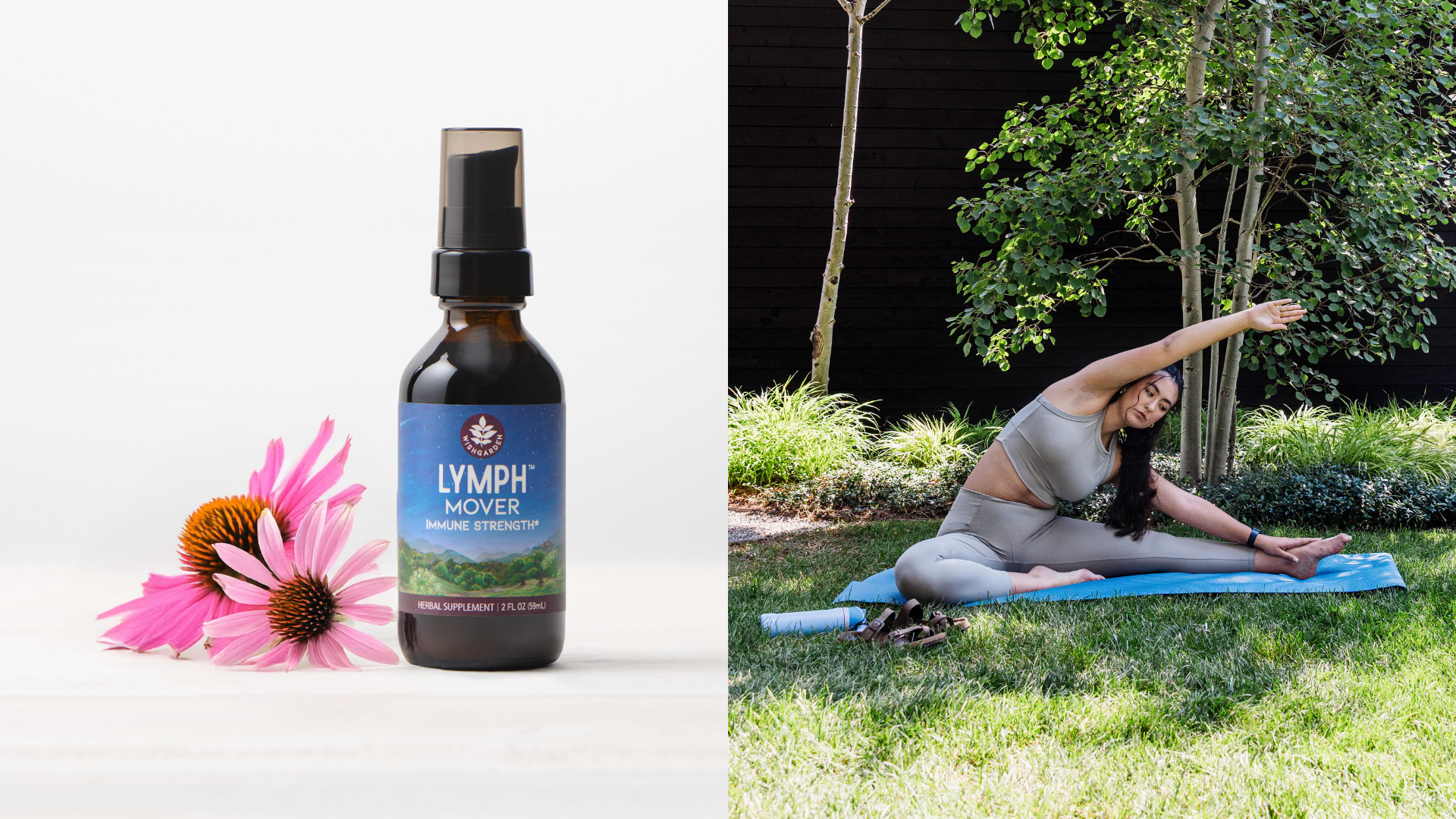
The Six Herbs Behind Lymph Mover
Lymphatic wellness might be having a moment, but it isn't new to WishGarden. We've been formulating herbal blends since 1979, and every immune formula in our line already carries lymphatic herbs. Lymph Mover is the one dedicated entirely to this hardworking system.
A clinical herbalist formulated it around six botanicals chosen specifically for lymphatic support, drawing on decades of clinical experience, with sustainably sourced herbs throughout. The formula has three important jobs: move lymph and counter stagnation, support lymph-centered immune activity, and support your natural detox pathways and skin health. Natural detox, immune health, and fluid balance, in one bottle.
Think of it as the difference between a specialist and a generalist. Both have their place, but when your lymphatic system is the thing that needs a hand, you want the herbs chosen for that job and nothing else riding along for the label.
Six Herbs Chosen for Lymphatic Support
A great herbal blend formula is more than a collection of popular ingredients. It's knowing which herbs belong together and why. Here are the six and what each one brings.
- Red Root (Ceanothus americanus) is the deep lymphatic mover, with a long history in North American herbal traditions and an affinity for the lymph nodes and spleen. Herbalists have called it a lymph mover for generations, which is where this formula gets its name.
- Cleavers (Galium aparine) is the cooling lymphatic tonic, traditionally used to move stagnant lymph and improve lymphatic drainage. It supports the kidneys too, which makes it a dual-action herb for both the lymphatic and urinary systems.
- Red Clover (Trifolium pratense) pairs with cleavers for inflammatory balance and gentle waste elimination. Rich in phytoestrogens, it has traditionally supported healthier skin as the body clears metabolic waste.
- Echinacea (Echinacea angustifolia) is known for immune support, but its lymphatic role is the lesser-known talent. It helps support lymphatic circulation, especially during an immune challenge.
- Baptisia (Baptisia tinctoria), also called wild indigo, is used by herbalists in low doses for its stimulating influence on the lymphatic and immune systems. It's rarely used alone, which is exactly why it belongs in a combination formula like this one.
- Calendula (Calendula officinalis) rounds it out with support for tissue health and skin vitality.
Red root and cleavers handle the movement. Red clover and calendula work on gentle waste elimination and skin health. Echinacea and baptisia cover the immune side.
Every WishGarden herbal blend, including Lymph Mover, goes through a triple-extraction process. Alcohol pulls the broadest range of constituents from each plant, and water and glycerin add efficacy and improve taste.
When to Reach for Lymphatic Support
Plenty of ordinary moments create the exact conditions that slow lymph flow down, and most of them are already part of a normal week.
- Long travel, when hours in a car seat or an airplane seat mean almost no movement, and leg swelling starts to show up by the time you land.
- A desk-bound week, when sitting replaces the muscle activity lymphatic drainage relies on.
- During or after an immune challenge, when your cleanup crew has extra work on top of its usual route.
- After a doom-scroll session on the couch (it happens to the best of us).
- After minor surgery or dental work, when recovery naturally limits movement for a few days.
- Allergy season or a seasonal cleanse, when your system is managing more than usual.
- When you feel puffy, congested, or notice mild fluid retention for no obvious reason at all.
These are normal moments, and they're exactly when your lymphatic system could use a little extra support to keep pace. A lot of them overlap, too. Work travel often lands in the middle of a busy, sitting-heavy stretch. Allergy season shows up right when your immune system already has plenty on its plate. Reaching for lymphatic support in any of them is less about fixing a health problem and more about meeting your body where it already is.
Lymphatic support tends to work best before you feel stuck, not after. It's easier to keep a river moving than to get it flowing again once it's stalled.
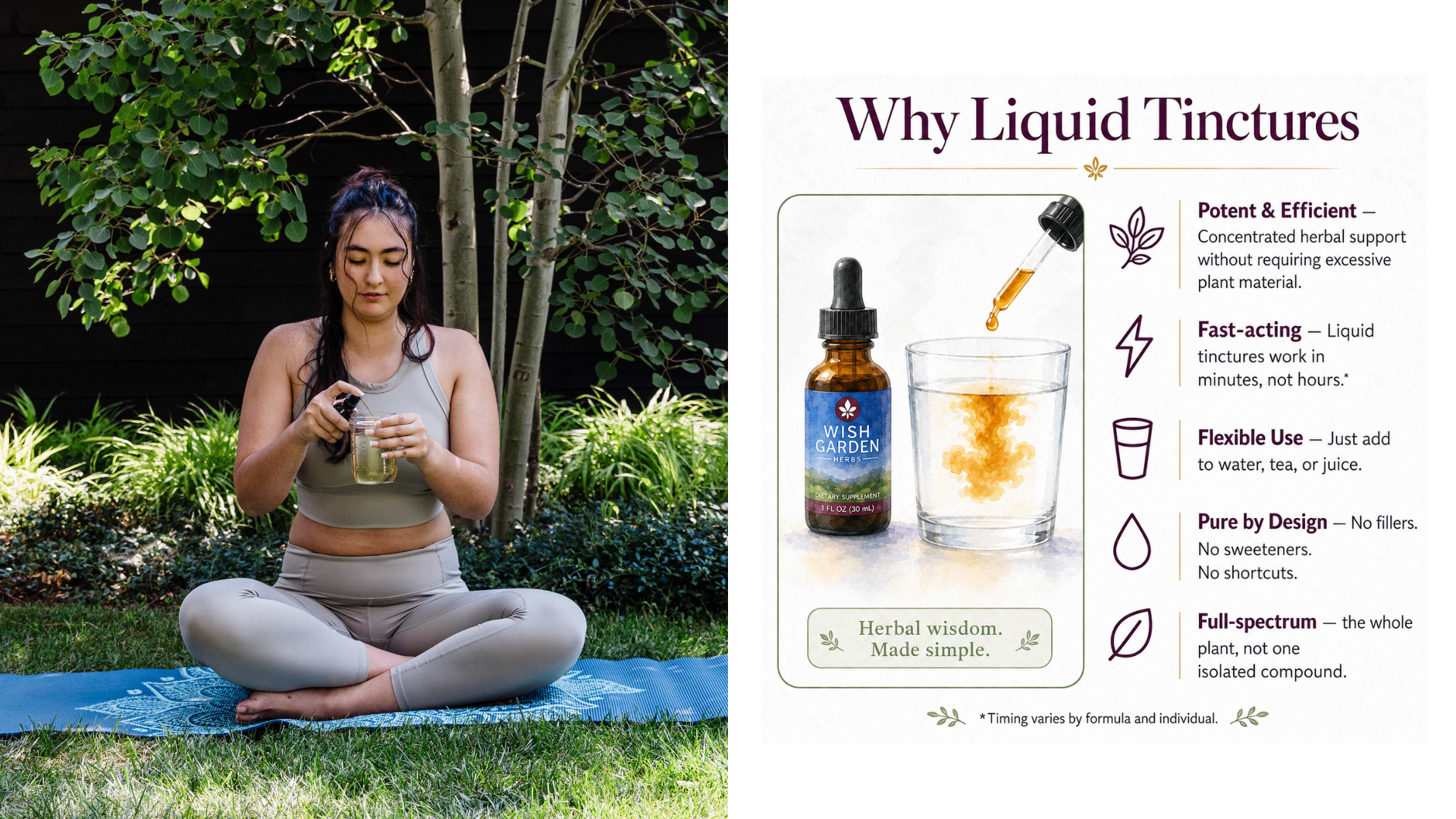
Daily Habits That Keep Lymph Moving
A few habits go a long way toward supporting lymphatic system health on their own, and none of them require special equipment or a big time commitment.
- Movement is the big one, even something as simple as a daily walk. Your lymphatic system rewards consistency more than intensity for optimal performance. A short walk most days does more for it than one hard workout a week.
- Breathwork and yoga add a different kind of push. Deep breathing changes the pressure in your chest and abdomen, which helps draw lymph fluid through the body, and gentle, twisting poses do a similar job by working muscle groups your daily walk might not reach.
- Hydration matters too. Lymph fluid is mostly water, and it needs enough of it in your system to move freely rather than sit thick and sluggish. Healthy fluid balance starts here.
- Dry skin brushing and lymphatic massage are popular habits for a reason. A few minutes with a natural-bristle brush before a shower, using light, rhythmic strokes toward the heart, supports surface lymph movement, and it takes almost no extra time.
Here's the distinction worth knowing. Dry brushing and lymphatic massage are great for supporting movement at the surface, right where the brush or the hands can reach. A liquid herbal supplement goes beyond the surface. It offers the kind of comprehensive, systemic lymphatic support a brush alone can't reach. They're complementary, not competing, and most people get the most out of using both. If you're already building daily wellness habits into your routine, lymphatic drops fit right alongside them.
FAQs: Lymphatic Support
Can I take lymphatic support herbs every day?
Yes, but it can depend on the herbs and the product. Lymph Mover is formulated for consistent daily supplementation, and lymphatic support tends to work best as a daily habit rather than an occasional rescue. Many people reach for it more often during travel, allergy season, or a seasonal cleanse, then settle back into a steady routine the rest of the year. Length of use depends on individual needs. Consult with a practitioner for consistent use beyond 3 months.
How do I take Lymph Mover?
Take 3mL (4oz bottle) or 8 pumps (2oz) in a little water 2-4 times per day, or as your practitioner recommended.
Does this replace dry brushing or massage?
No, and it isn't meant to. Dry brushing and lymphatic massage support movement at the surface. A liquid herbal blend works through the whole network. Most people use both together, treating the daily habits as maintenance and the herbal blend as the deeper layer underneath, for the body's multiple benefits.
Should I check with my health care provider first?
Yes, especially if you're pregnant, nursing, taking medication, or managing an ongoing health condition or medical problem. Don't solely rely on herbal supplements in place of professional care. A licensed health care professional who knows your history is the right person to talk to before adding any new dietary supplements. Discontinue use and contact your health care provider immediately if a negative reaction occurs.
Why six herbs instead of one?
Because they cover different jobs. Red Root and cleavers move lymph, echinacea and baptisia support lymph-centered immune activity, and red clover and calendula support your natural detox pathways and healthier skin. Baptisia in particular is traditionally used in combination rather than alone. That's the key benefit of a formula built around one system instead of borrowing one herb from twenty others.
Keep Your System Moving
Picture that river one more time. It's been running through your body every single day, whether you've noticed or not, keeping fluid balance steady, immune cells traveling, and waste clearing out the way it's supposed to. A little lymphatic support helps it flow more freely, especially in weeks when life doesn't give you much room to move.
Herbs like red root and cleavers help get that movement going; echinacea and baptisia support the immune side of the work, and red clover and calendula help with gentle waste elimination and skin health. You'll find all six working together in Lymph Mover, a formula designed to support the optimal function of your lymphatic system.
Resources
- The Herbal Medic, "Understanding Tinctures: The Science of Herbal Extraction, Solvent Polarity & Chemistry"
- Roon, "Sublingual Absorption: Bypassing First-Pass Metabolism"
Rebecca Younger is passionate about herbs and women's health. She aspires to plant seeds of inspiration within her community about plant medicine and healthier ways of life. She studied Herbal Medicine at Herbalism Roots in Denver and is a certified Doula through the Matrona Foundation. She is the Brand Communications Specialist at WishGarden Herbs.
For educational purposes only. This information has not been evaluated by the Food and Drug Administration. This information is not intended to diagnose, treat, cure, or prevent any disease, or to sell any product.


