

Yerba Santa: Stewardship & Seasonal Support

At WishGarden, we care about the full life of an herb. We care about how it grows, who stewards it, how it is harvested, and how its traditional uses continue to inform the formulas we make.
Yerba santa is one of those plants that asks to be understood in that fuller way.
It is an herb with a long-standing place in North American herbal practice, especially for respiratory support. It is also a plant shaped by fire, return, and the kind of ecological succession that reminds us medicine does not begin in a bottle. It begins in relationship, in landscape, and in the careful work of people who know how to harvest with the future in mind.
That is part of why yerba santa matters to us.
A Traditional Herb for Respiratory Support
Yerba santa has traditionally been used as an expectorant and decongestant, with a history of use for the lungs, upper respiratory tract, and seasonal respiratory comfort. ¹ Its reputation in herbal practice has endured for good reason.
This is a plant herbalists have turned to for generations when looking to support clear breathing and respiratory ease. At WishGarden, that traditional use is part of why yerba santa has a place in Kick-Ass Allergy and its contributions in other formulas that support seasonal respiratory comfort. ¹
What continues to distinguish yerba santa, though, is not only its medicinal relevance. It is the way its medicinal story remains tied to place.
A Plant of Return
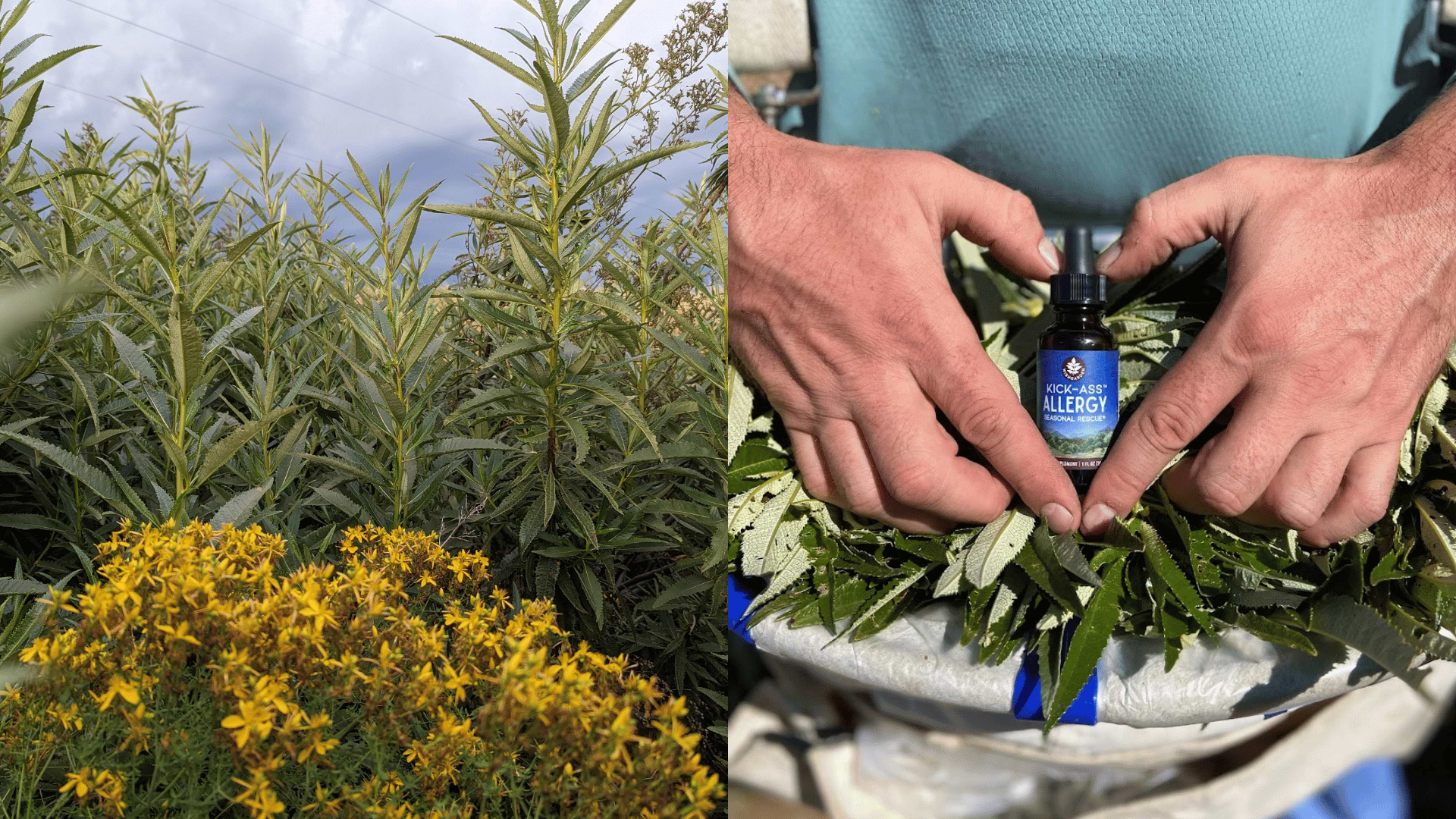
In burn scar landscapes where yerba santa returns, the plant tells a larger story about resilience and ecological participation. It is not simply growing after disturbance. It is part of a wider pattern of return.
The herb thrives in landscapes shaped by fire, seed germination requiring high heat, and its presence in those spaces offers a powerful reminder that healing and regrowth are often collective processes. Plants return. Soil recovers. Native plant communities reassemble. Skilled stewards learn how to move within that process without taking too much from it.
That understanding matters to us as a company committed to ethical sourcing and relationship-based herbalism.
Stewardship Behind the Harvest
When we think about yerba santa, we do not think only about its role in a formula. We also think about the wild-land stewards or wild collectors whose work makes responsible harvest possible.
We think about the knowledge required to identify healthy stands, understand timing, recognize how much can be harvested, and know how much should be left behind. We think about stewardship not as a marketing phrase, but as an ongoing practice of restraint, observation, and return.
That perspective was reinforced through field experience and through collaboration with the Sustainable Herbs Initiative, which guided documenting our wildland stewards’ harvest and brought greater visibility to the real practices behind ethical wild collection.
For us, that kind of documentation matters because it helps connect medicinal use with sourcing integrity. It reminds us that quality and stewardship are not separate conversations. They are deeply intertwined.
Why the Monograph Matters
Yerba santa’s medicinal tradition deserves that kind of context.
According to coverage of the American Herbal Pharmacopoeia’s Yerba Santa monograph, the plant has long been regarded as one of the most valued traditional herbal medicines in its region, particularly for respiratory support.¹ The monograph is notable because yerba santa had not previously been included in another pharmacopoeia, despite its rich ethnobotanical and therapeutic history.¹
That recognition helps affirm what herbalists and plant people have understood for a long time: yerba santa is both regionally rooted and medicinally significant, which is precisely why WishGarden contributed to the American Herbal Pharmacopoeia Monograph: Yerba Santa Leaves & Tops.
Resin, Aroma, and Identity
The herb’s resinous leaves are part of what makes it so distinctive. Yerba santa has been described as rich in external leaf resin and recognized for its sweet aftertaste, qualities that contribute to both its sensory profile and its herbal identity. ¹
For those who have worked with the plant directly, that resinous, aromatic character is unmistakable. It is part of what gives yerba santa its presence, both in the field and in the apothecary.
That sensory character also reflects a broader truth about herbal medicine. Plants are not abstractions. They are physical, aromatic, textured, and alive in ways that shape how we come to know them.
For yerba santa, the medicinal and sensory story move together. Its traditional use in respiratory support, its aromatic leaf, its resinous feel, and its long-standing place in regional herbalism all speak to the same thing: this is a plant with a strong and coherent identity.
From Field to Formula
At WishGarden, that matters.
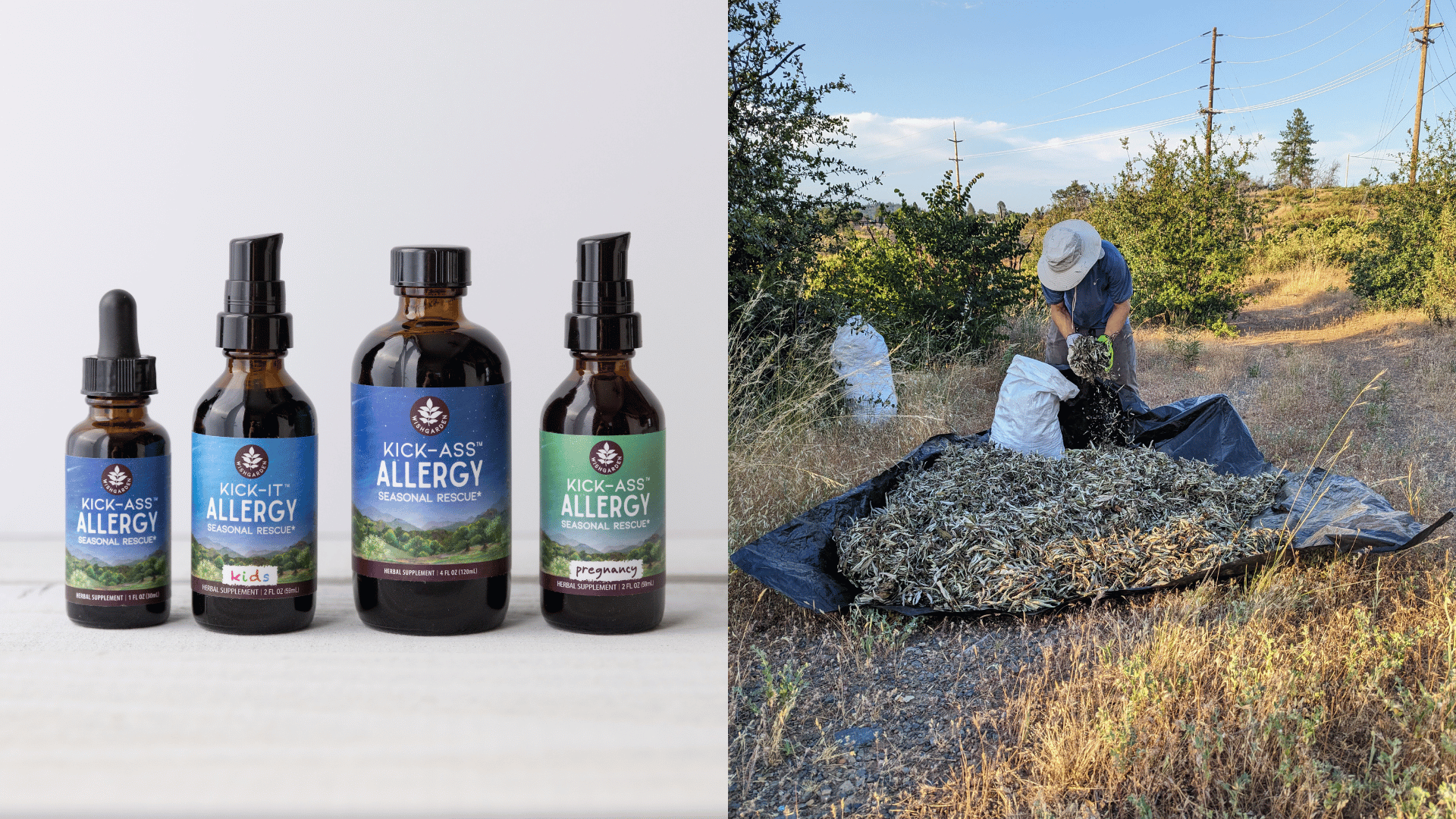
We believe formulas are stronger when they are rooted not only in herbal tradition, but also in respect for the living systems that sustain those herbs. Yerba santa’s place in Kick-Ass Allergy is not just about including a well-known respiratory plant. It is about honoring a plant whose traditional uses align with the kind of seasonal respiratory support the formula is designed to provide. ¹
It is also about recognizing that the value of the herb depends on the quality of the material, the integrity of the sourcing, and the care of the people who steward it in the field.
More Than an Ingredient
That is where yerba santa’s story becomes larger than its medicinal use alone.
It becomes a story about return. About the return of the plant after fire. About the return of native systems after disturbance. About the return of harvesters and stewards who know these landscapes over time. And about the return, again and again, to herbal traditions that continue to offer something practical, grounded, and relevant.
In a time when sourcing language can easily become polished and abstract, yerba santa asks for something more honest. It asks us to look at the conditions that make herbal medicine possible. It asks us to pay attention to the connection between stewardship and quality. And it asks us to remember that respiratory support is not just a technical category on a label. It is part of a much older relationship between people, plants, and place.
That is how we hold yerba santa at WishGarden.
As an herb of respiratory support, it carries a meaningful tradition. As a wild-harvested plant, it calls for care. And as part of a living sourcing story, it reminds us that good herbalism is never only about what a plant does. It is also about how that plant is known, respected, and returned to.
Sources
- Connor Yearsley, “American Herbal Pharmacopoeia Publishes Yerba Santa Monograph and Therapeutic Compendium,” 138, American Botanical Council, and related June 2023 HerbalEGram coverage.
Lauren Ann Nichols-Sheffler is a certified medical herbalist from the Colorado School of Clinical Herbalism. She advocates for bioregional herbalism, co-stewards the Denver Herb Club, teaches at CSCH, and hosts community events at her United Plant Savers Botanical Sanctuary. As Senior Sourcing & Purchasing Manager at WishGarden Herbs, Lauren brings her passion for sustainability and plant education into every aspect of her work.


