

An Herbalist's Guide to Healthy Lungs after Wildfire Season

After a summer of hazy skies and smoky air, the best thing we can do for our lungs heading into the colder months is help them recover from months of polluted air. And even if wildfire smoke never touched your town this year, your lungs likely still worked overtime. The American Lung Association's 2025 "State of the Air" report found that 156 million Americans, roughly 46% of the country, breathed unhealthy air between 2021 and 2023, a jump of 25 million people from the year before. Wherever you live, your lungs have been doing more work than usual lately.
The best place to start is to assess your unique needs. Were you exposed to wildfire smoke for weeks or months at a time? Do you live in a city with consistently poor air quality? Or are you recovering from just a day or two of heavier exposure? Herbalists start from that same question, because the right approach to restoring them depends on it. Some situations call for acute support, short bursts of potent, fast-acting herbs. Others call for tonic support, the slower, steady, daily kind that builds resistance and resilience over time.
What's Actually Happening Inside Your Lungs
Let's start with the mechanism, not the symptom. When you breathe in smoke, dust, or thin high-altitude air, it travels down your airways and into your lungs, eventually reaching the hundreds of millions of tiny air sacs called alveoli, where oxygen exchange (also called gas exchange) actually happens, as the National Heart, Lung, and Blood Institute (NHLBI) explains about the respiratory system. You do this thousands of times a day without thinking about it.
Carbon dioxide moves out of your blood and into the alveoli, while oxygen moves the other way, into the capillaries surrounding your lungs. That oxygen flow, carbon dioxide out and oxygen in, is the entire point of your lungs. Those air sacs keep your lungs thin, thin enough for oxygen to pass through easily.
Particulate matter from smoke or dust is small enough to reach deep into your lungs. It slips past the mucosal linings and airways that usually filter out larger particles, then triggers local irritation and inflammation. Your airways narrow, your lungs lose a little of their normal give, and your alveoli work harder to move the same amount of oxygen, which slows the improvement in oxygen flow right when you need it most. Noticing how much air you move on an easy day gives you a baseline for a hard one. That's why a familiar climb can suddenly feel harder than it should, and why your breathing shifts before you consciously notice it.
Tightness, a nagging cough, labored breathing, shortness of breath that shows up sooner than usual- these are common breathing problems during heavy exposure, not proof something's permanently wrong. Some people's lungs reset within a day or two of fresh air. Others carry a lingering sensitivity longer, especially after heavier exposure. Neither means something's wrong with you, just that your lungs, like any of your vital organs, are responding to a real physical event. People have leaned on herbal support during that recovery window too, including the traditional use of mullein.
Which Situation Are You In
Environmental pollutants don't wait for fire season, but smoke concentrates the problem fast. Before reaching for anything, herbal or otherwise, get an honest read on your own exposure. Most advice skips straight to a list of remedies, as if a single smoky commute and a whole fire season ask the same thing of your lungs. They don't.
Picture your exposure on a spectrum with three rough zones:
- A single event. One smoky day, one dusty job site, one hard climb at altitude, followed by fresh air and normal breathing again within a day or two.
- A repeated pattern. Several rough days spread across a few weeks, when fire season settles in and doesn't leave.
- Cumulative exposure. Years of regular exposure that add up, and that your lungs feel it even on the days the air looks clear, whether that's from where you live or the work you do.
Wildfire smoke is harder to eyeball than typical outdoor air pollution because it's more variable in intensity, frequency, and duration. That's exactly why figuring out where you land on this spectrum matters more. Some herbs, including those behind the traditional use of osha root, are built for the acute moment. Others are built for steady, daily use.
Acute Support or Daily Support
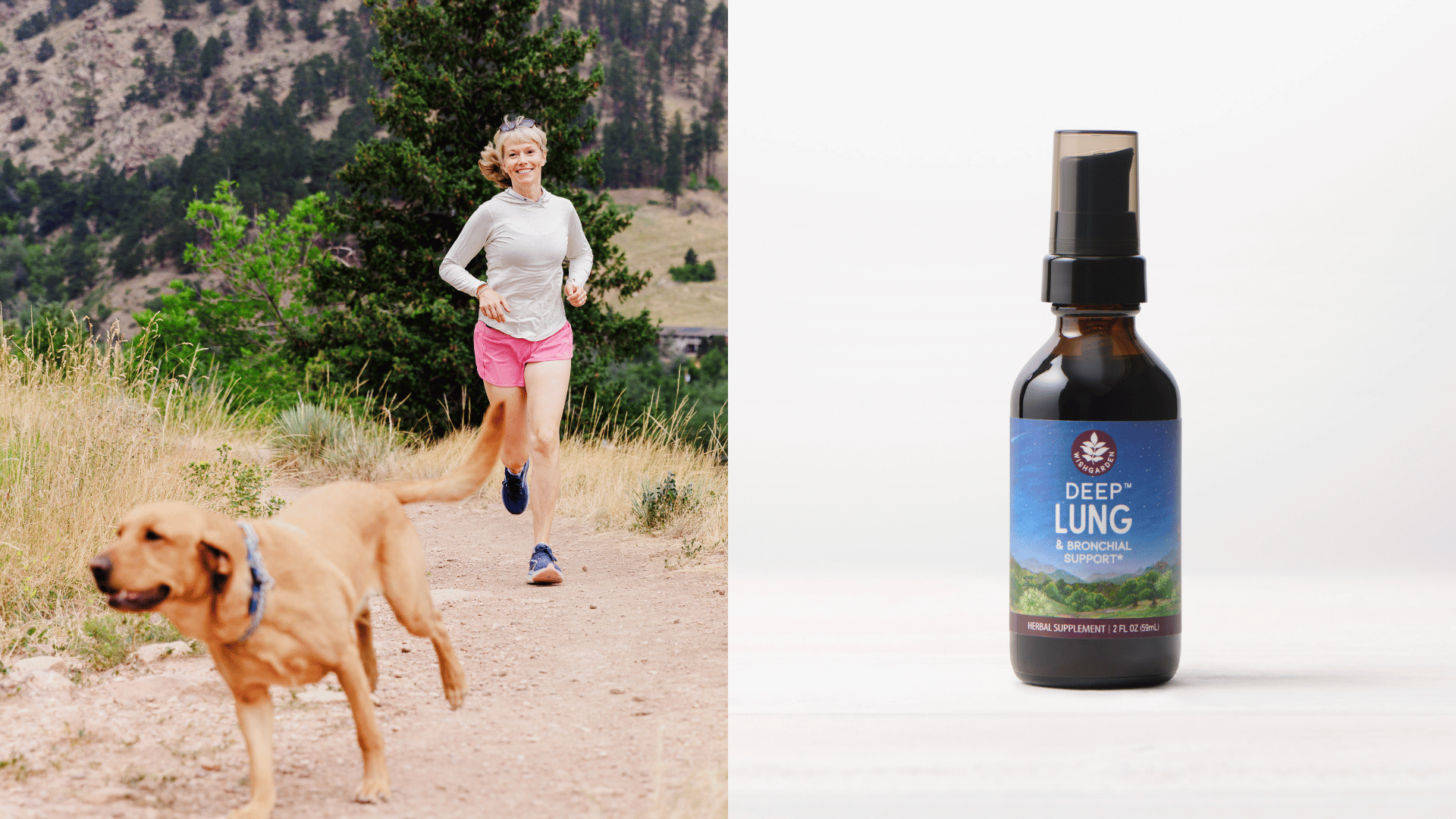
Once you know where you land, your regimen gets simpler. Are you supporting your lungs through a single exposure, or building resilience for a pattern that isn't going away soon? Our two lung formulas are a useful, concrete way to see that split. Their labels follow acute-versus-ongoing logic, not a blanket "take daily" instruction.
Deep Lung is built for the acute moment. The label calls for 3mL in water for immediate support, repeated as needed, or 3mL every one to three hours for up to five consecutive days under heavier exposure. It's a short-term tonic, meant for one to three weeks after exposure to smoke, pollution, dust, or other irritants, not for indefinite use.
Respiratory Strength sits at the other end. It's a daily tonic for lung health, taken consistently rather than reached for after one rough day. A formula built for a five-day window and one built for months of steady support are solving two different problems, even for the same lungs.
So the real question isn't which lung herb is "best." It's whether you're dealing with a moment or a pattern. A single smoky week points toward acute support and a return to baseline breathing once the air clears. Daily support isn't one dramatic change; it's slow, steady work that can help increase lung capacity over months, the same way regular exercise builds any other muscle. Pairing it with brisk walking helps your body use more oxygen and can improve lung capacity over time.
If you're not sure which camp you're in, default to the shorter, acute window first. You can always extend it or shift to daily support once the pattern's clear.
Some people pair daily support with breathing techniques too. Pursed-lip breathing and diaphragmatic breathing (also called belly breathing) are two common ones, and practicing deep breathing between reps, or taking one deliberate deep breath before you head back out, can ease a tight chest fast. These work the respiratory muscles that move air, alongside herbal support, not instead of it.
Reading the Air Before You Go
Knowing your category only helps if you check the air before you head out. The U.S. Air Quality Index runs from Good (0-50) through Hazardous (301+) across six color-coded categories. Once the number crosses 100, air quality is unhealthy, first for sensitive groups, then for everyone as it climbs. The American Lung Association says the same thing in different words: match your physical activity, your breathing, and your gear to it.
Check it the way you'd check a weather forecast, before a run, a ride, or a shift outside. It takes less time than lacing up your shoes, and that's a small price for healthy lungs during fire season.
When the number's high, don't cancel everything, just adjust. Lighten the activity, breathe deeply, and slow your breathing with pursed lips if that helps, and take more frequent breaks during a long outdoor shift.
Reach for a properly fitted N95 respirator instead of a bandana or loose cloth. Looser coverings don't filter fine particles the way a real respirator does, so your lungs end up exposed anyway. Keep one in your pack or truck during fire season. Some people keep an herbal option nearby too, including the traditional use of elecampane.
Indoor air matters just as much. Keep the spaces you live and work in clean, since proper ventilation is one of the simplest ways to cut indoor air pollution. Dust and allergens build up fast when windows stay shut, and stale air makes indoor air pollution easy to forget about when the danger feels like it's all outside. Skip burning wood or solid fuel for heat or cooking when you can, since that adds another source of particulate matter to the air you're already filtering. A portable air purifier improves indoor air quality without much effort, and it's worth testing for radon gas too, a separate indoor risk a lot of homes carry.
Running a purifier in the room you sleep in helps most on the worst days of fire season. It won't undo an afternoon spent outside, but it gives your lungs a genuine break overnight, letting your breathing settle while you sleep. Your lungs thrive on that reset, and small habits like this keep your lungs healthy through fire season.
None of this is only about wildfire season, either. Avoiding secondhand smoke and cigarette smoke matters just as much for your lungs, whether the air outside is clear or smoky, and if you're a smoker, quitting smoking remains one of the single best moves you can make for long-term respiratory health.
Know Your Starting Point
Most of this fits a generally healthy adult managing a rough exposure day or a demanding season. Some people need a different starting point, and being active and capable most of the time doesn't cancel out a real underlying condition.
If you live with asthma or another lung condition, smoke exposure can trigger a more serious response, sometimes serious enough to need medical attention. Follow your practitioner's guidance over general steps, and ask if breathing exercises make sense for you specifically.
The same goes for adults over 65. Lung capacity naturally declines with age, and some people work with a practitioner on ways to help maintain it. For anyone managing sleep apnea or other lung conditions, smoke exposure can shift how you handle hard air days. Early detection of your own warning signs matters more than any general rule, and regular check-ups help once you're managing something ongoing.
Pregnancy belongs on this list too. The increased breathing rate that comes with pregnancy can raise sensitivity to smoke, so it's common to experience shortness of breath sooner than usual. Anything that lingers is worth mentioning to your healthcare provider. Neither Deep Lung nor Respiratory Strength is intended for use during pregnancy or while nursing, and both labels ask anyone with a medical condition or taking medication to check with a practitioner before use first. That's a plain label fact, not a hedge.
Make the First Call
For everyone else, make checking the air quality number as routine as checking the weather. It takes ten seconds and tells you exactly what your lungs are up against today.
Heading into the colder months is a natural point to reset. If you're recovering from a single rough stretch, acute support built for a short window is the right tool. If you're looking at a longer pattern, daily, tonic-style support does the steadier work of helping you improve lung health over time. Either way, pairing that support with the basics, regular exercise, a few minutes of breathing exercises, and genuinely fresh air when you can get it, does more for your overall well-being than any single formula on its own. If something still feels off once the air clears, that's worth a conversation with your healthcare provider rather than something to push through.
Browse the respiratory support formulas built for your situation and pick the one that matches where you are, so you can keep your lungs healthy and breathe easier all season, no matter what this past summer put in the air.
Rebecca Younger is passionate about herbs and women's health. She aspires to plant seeds of inspiration within her community about plant medicine and healthier ways of life. She studied Herbal Medicine at Herbalism Roots in Denver and is a certified Doula through the Matrona Foundation. She is the Brand Communications Specialist at WishGarden Herbs.
For educational purposes only. This information has not been evaluated by the Food and Drug Administration. This information is not intended to diagnose, treat, cure, or prevent any disease, or to sell any product.


