

Cacao Benefits: The Ritual, the Science, and the Chocolate

Reviewed By:

Long before cacao became a chocolate bar or pantry staple, it was prepared slowly and shared with intention. In many cultures, cacao was consumed in ceremony, valued not only as nourishment but as a plant tied to vitality, connection, and pleasure.
Raw cacao earned a long-standing reputation as an aphrodisiac, not for quick stimulation, but for the way it supports circulation, presence, and sensory awareness. Today, that legacy continues. From raw cacao powder and organic cacao powder to cocoa-rich dark chocolate, cacao is still enjoyed across cultures for its flavor, natural compounds, and wide range of health benefits.
Cacao benefits extend well beyond the pleasure of eating dark chocolate. Each cacao bean contains naturally occurring flavonoids, minerals, and antioxidant properties that support healthy blood flow, brain health, and cardiovascular health as part of a balanced diet.
Unlike heavily processed cocoa powder, raw cacao and minimally processed cacao powder retain more of cacao’s natural form. Whether sipped as hot chocolate, blended into smoothies, or enjoyed as cacao nibs, cacao invites a pause that feels both grounding and alive.
What is Theobroma cacao?
The cacao tree, botanically known as Theobroma cacao, translates to “food of the gods.” Native to tropical regions of Central and South America, this evergreen tree produces the cacao bean, which is the source of cocoa beans, cacao powder, cocoa butter, and chocolate products of all kinds.
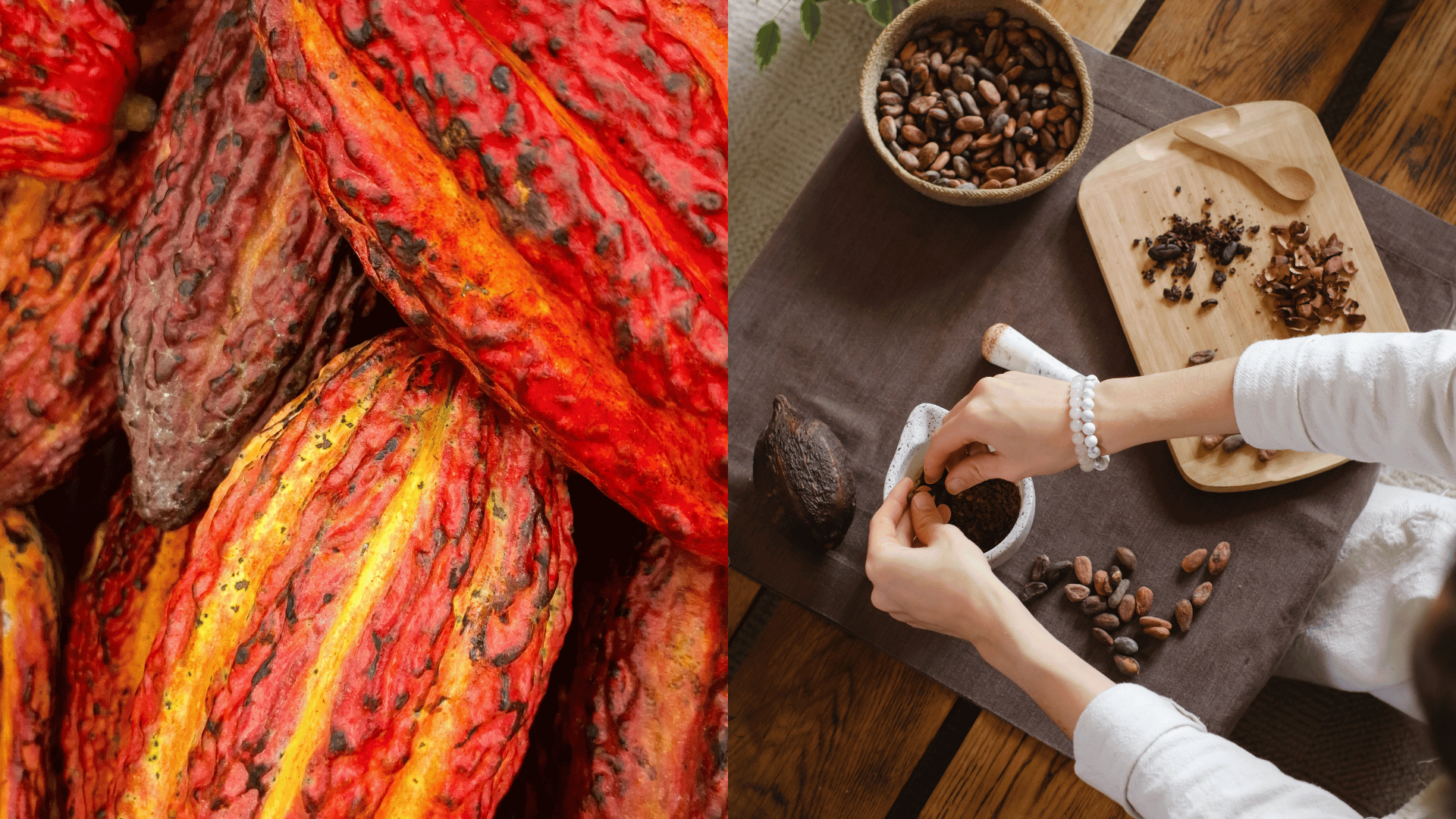
Cacao trees thrive in humid rainforest environments and produce colorful pods that grow directly from the trunk. Each pod contains dozens of cacao beans that undergo fermentation and drying after harvest. These traditional processes help preserve cacao’s natural compounds while developing the familiar chocolate flavor found in dark chocolate and cocoa-rich chocolate.
From ceremonial cacao to modern chocolate bars, all cacao products trace back to this remarkable plant.
Historical Use and Cultural Significance
Cacao holds a long and respected place in human history. Archaeological evidence shows cacao consumption dating back more than 3,500 years. Indigenous cultures across Mesoamerica prepared cacao as a beverage and honored it for both nourishment and ceremony.
The Maya and Aztec civilizations used cacao beans in rituals, daily nourishment, and even as currency. Unlike modern milk chocolate, traditional cacao drinks were often bitter and rich in flavanol-rich compounds. These early cultures recognized cacao as a food that supported vitality, circulation, and connection.
Health Benefits and Nutritional Properties
Cacao contains a wide range of natural compounds that contribute to its many health benefits. The flavonoids in cacao and cocoa flavanols support antioxidant properties that help protect cells from oxidative stress and support overall cellular health.
Cacao is also a natural source of theobromine, a gentle, long-acting compound known for its uplifting and expansive feel. Unlike caffeine, theobromine supports circulation and alertness without sharp spikes, which is one reason cacao has long been associated with improved mood, emotional openness, and a calm sense of energy.
Alongside minerals such as magnesium and iron, cacao supports energy production, muscle recovery, nervous system function, and immune system balance. When included as part of a healthy diet, cacao offers meaningful nutritional value without relying on artificial additives.
Cardiovascular and Circulatory Support
One of the most studied cacao benefits relates to cardiovascular health. Cocoa flavanols are associated with supporting nitric oxide production, which plays a role in maintaining relaxed blood vessels and healthy circulation.
Cacao supports heart health in several ways:
- Flavanol-rich cocoa supports healthy blood flow and increased blood flow throughout the body
- Cocoa consumption is associated with supporting healthy blood pressure levels
- Cocoa polyphenols help support flexible blood vessels and cardiovascular health
- Flavonoids in cacao support normal platelet function and healthy blood clotting processes
These benefits are most associated with dark chocolate and raw cacao rather than milk chocolate, which typically contains less cacao and more sugar.
Brain Health and Cognitive Function
Cacao also supports brain health through its relationship with circulation. Cocoa flavanols may help support healthy blood flow to the brain, which plays a role in brain function and cognitive function.
Some studies suggest cacao’s flavanol-rich compounds can cross the blood-brain barrier, supporting normal brain cell function. Increased blood flow to the brain may support focus, memory, and mental clarity in healthy adults and has been studied in relation to mild cognitive impairment.
Cacao contains theobromine, a naturally occurring compound that offers gentle stimulation without the sharp spikes associated with caffeine. This makes cacao a popular choice for supporting the nervous system and sustained energy.
Metabolic, Digestive, and Immune Support
When enjoyed as part of a balanced diet, cacao can be a supportive addition to everyday metabolic wellness. Research suggests that compounds found in cacao may help support normal insulin activity and metabolic processes already within a healthy range.
The fiber found in cacao nibs supports normal digestive system function and contributes to overall gut health as part of a varied diet. Cacao’s antioxidant properties help support the body’s natural response to everyday oxidative stress, which plays a role in maintaining immune system balance and overall health.
Cacao is commonly included in nourishing recovery foods, particularly for active individuals, because it provides nutrients involved in normal energy production and muscle recovery. When paired with adequate rest and a healthy diet, cacao fits naturally into routines that support whole-body resilience.
How to Use Cacao
Cacao is versatile and easy to incorporate into daily rituals, whether as a food or through traditional herbal preparations. Choosing minimally processed forms allows you to experience cacao in ways that preserve its naturally occurring compounds and rich sensory qualities.
Common ways to enjoy cacao include:
- Raw cacao powder blended into smoothies or hot chocolate made with milk (or almond milk)
- Cacao nibs added to yogurt, oatmeal, or trail mix for texture and flavor
- Dark chocolate with high cocoa content enjoyed mindfully
- Ceremonial cacao drinks are lightly sweetened with maple syrup or honey and prepared with intention
In herbal traditions, cacao has also been prepared as a tincture, using alcohol and/or glycerin to extract a broad range of cacao’s constituents. This method allows both water-soluble and alcohol-soluble compounds to be drawn from the cacao bean, offering a concentrated way to experience cacao beyond food alone. Tincturing cacao highlights constituents such as flavonoids, alkaloids like theobromine, and aromatic compounds that contribute to cacao’s characteristic warmth and sensory depth.
Pairing cacao with healthy fats such as nuts or coconut can support the body’s natural absorption of fat-soluble compounds. Whether taken as a beverage, food, or tincture, moderation matters. Small, regular servings of cacao powder, cacao-rich foods, or herbal preparations fit well into a balanced diet and intentional wellness routines.
WishGarden Formulas That Feature Cacao
At WishGarden, cacao is valued not only for its rich flavor but for how it works in synergy with other plants to support connection, ease, and presence. When thoughtfully combined, cacao’s warmth and sensory depth become part of a broader herbal experience that feels both grounding and uplifting.
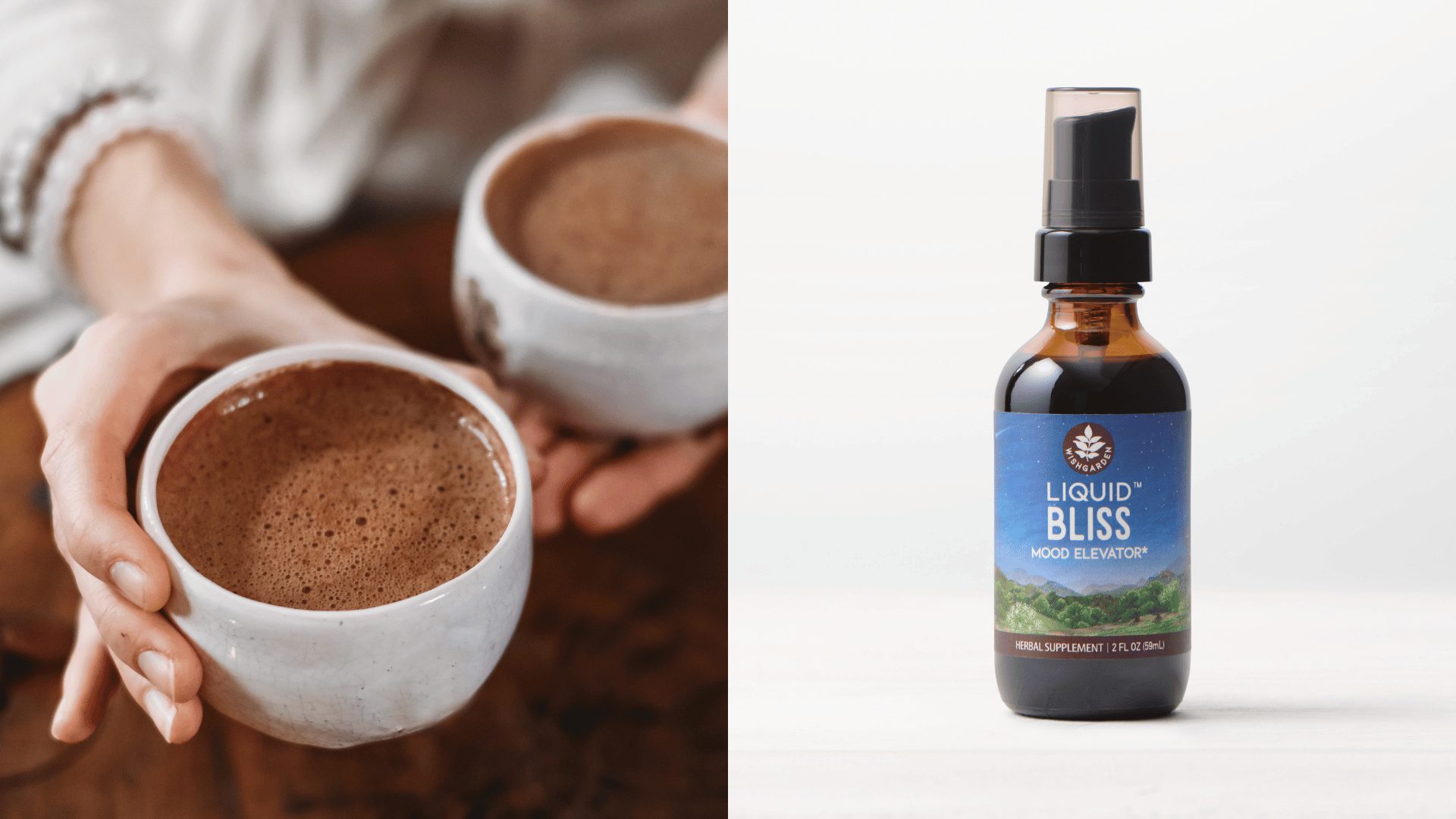
Liquid Bliss: Liquid Bliss features organic cacao blended with passionflower, damiana, and hawthorn berry, herbs traditionally used to support mood, emotional balance, libido, and nervous system nourishment. This formula was crafted with social moments in mind. It is often enjoyed before gatherings, moments of intimate connection, or as part of a wind-down ritual that does not rely on alcohol.
Cacao and damiana have long histories of traditional use as aphrodisiac herbs, valued not for stimulation, but for their ability to encourage relaxation, circulation, and emotional openness. In Liquid Bliss, these plants work together to support a sense of ease and connection, making it a popular choice for date nights, socializing, or simply feeling more at home in your body.
Many people also enjoy Liquid Bliss as an alternative to alcohol, adding it to sparkling water, herbal tea, or creative mocktails. Used this way, it offers a plant-based option for social rituals without the heaviness or next-day effects often associated with alcoholic drinks.
WishGarden tinctures are crafted using a blend of organic alcohol, vegetable glycerin, and pure spring water. This three-part extraction process is designed to draw out a broad spectrum of plant constituents, including water-soluble and alcohol-soluble compounds, while remaining gentle and balanced. Compared to traditional single-solvent tinctures, this approach results in a lower alcohol content per serving, making Liquid Bliss easy to enjoy regularly and in a variety of ways.
Safety and Considerations
Cacao is generally well tolerated by healthy adults. Because cacao contains theobromine and small amounts of caffeine, individuals sensitive to stimulants may prefer smaller servings or earlier consumption.
Those managing blood pressure or blood clot concerns with medication should consult their healthcare provider before significantly increasing cacao or dark chocolate intake. Cacao supports normal physiological function and is not intended to diagnose, treat, cure, or prevent disease.
FAQs: Cacao Benefits
What are the health benefits of cacao?
Cacao, when consumed in its raw or minimally processed form, offers several health benefits. It is rich in antioxidants, particularly flavonoids, which help calm the inflammatory response and protect cells from oxidative stress. These compounds support cardiovascular health by supporting blood flow and healthy blood pressure levels, and overall heart function. Cacao is also known to support brain health, cognitive function, mood, and memory. Additionally, cacao contains minerals like magnesium and iron, which are essential for energy production and nervous system health.
Is cacao powder better than cocoa powder?
Cacao powder is typically less processed than cocoa powder and may retain more cocoa polyphenols and flavanol-rich compounds. Raw cacao powder and organic cacao powder are often preferred for maximum benefits.
How does cacao support heart health?
Cocoa flavanols support nitric oxide production, which helps maintain relaxed blood vessels and healthy blood pressure already within a normal range. Regular cocoa consumption is associated with cardiovascular health support.
Can eating dark chocolate be good for you?
Eating dark chocolate with high cocoa content can be part of a healthy diet. Dark chocolate intake provides cocoa flavanols that support blood flow, brain function, and heart health more effectively than milk chocolate.
Does cacao support brain health?
Cacao supports brain health by supporting blood flow to the brain. Research suggests cacao may support cognitive function, brain function, and nervous system balance in healthy adults.
How does cacao affect blood flow?
Flavanol-rich cocoa supports healthy blood flow and blood vessels. Increased blood flow supports cardiovascular health, brain health, and muscle recovery.
Is cacao good for digestion and gut health?
Cacao contains fiber and natural compounds that support gut health and digestive system function. Cacao nibs may help nourish beneficial gut bacteria.
How much cacao should you consume daily?
For healthy adults, one to two tablespoons of raw cacao powder, a small serving of dark chocolate, or cacao added to hot chocolate made with almond milk fits well into a balanced diet.
Honoring an Ancient Food in a Modern World
Cacao’s journey from sacred beverage to modern superfood reflects humanity’s long relationship with nourishing plants. From supporting blood flow and cardiovascular health to contributing to brain health and overall vitality, cacao continues to offer meaningful benefits when enjoyed with intention.
Whether you reach for raw cacao powder, savor a square of dark chocolate, or enjoy cacao as part of a formula like Liquid Bliss, you are participating in a tradition rooted in connection, nourishment, and respect for the natural world.
Rebecca Younger is passionate about herbs and women's health. She aspires to plant seeds of inspiration within her community about plant medicine and healthier ways of life. She studied Herbal Medicine at Herbalism Roots in Denver and is a certified Doula through the Matrona Foundation. She is the Brand Communications Specialist at WishGarden Herbs.
For educational purposes only. This information has not been evaluated by the Food and Drug Administration. This information is not intended to diagnose, treat, cure, or prevent any disease, or to sell any product.


