

Expectorant Herbs and Why Mullein Isn't Enough

Most people have met mullein at some point in their life. It's gained popularity even with people who don't typically "hang out" in the wellness space. It's gentle, well-documented, and effectively coats and soothes irritated tissue.
But your lungs and respiratory tract are doing more than one job when you're fighting a cough and congestion. Soothing irritated tissue is one, but moving mucus that's actually stuck is a different one entirely. Mullein is excellent at the first. It's not built for the second, and treating it like a one-herb solution is where most home remedies and cough remedies alike fall a bit short. The best thing you can do for your respiratory system is understand its mechanisms and get specific about how you address each symptom.
Mullein isn't the whole story. Expectorants, demulcents, and tonic herbs come together as a team to soothe, expel, strengthen, and nourish.
Mullein does its job well, but it isn't built to move thick mucus out of your airways. That's what expectorants do, and they matter most once a cough turns wet and stubborn. Mullein also isn't the herb for the raw, tender feeling smoke or dry air can leave behind deeper in the airways. This is where combining companion herbs in a blend really earns its keep.
Mullein Is Where Most People Start
A smoky week will leave your eyes stinging, your throat feeling scratchy, and a few days later, a nagging and productive cough. A long flight through recycled cabin air does something similar, and so does a dusty trail at altitude, where dry air, grit, and other irritants work your respiratory system over the same way smoke does. Either one can leave you with coughing with low-level chest congestion that lingers well after the trip's over.
None of this means something's seriously wrong. Coughs and congestion show up with a common cold too, not just smoke exposure. They're your body's normal response. Reaching for an effective expectorant at the right moment can soften the edge.
Mullein's your first answer here, and it's earned that spot. Traditional use for coughs, hoarseness, and bronchitis goes back generations in Spanish folk medicine, and the history holds up. Mullein's mucilage content gives it real demulcent, coating action on irritated tissue, plus a mild expectorant effect that helps thin mucus just enough to keep your cough from feeling raw.
Think of it as a cool drink for a scratchy throat. You feel the difference the same evening you take it. Here's the part that gets skipped, though: soothing irritated tissue and clearing mucus that's actually stuck are two different jobs, even when they feel similar in the moment. Mullein's long tradition in respiratory care makes it genuinely good at the first one. It's only part of the answer for the second.
That's exactly why a real expectorant belongs in your toolkit too. It's built to expel mucus, not just soften the tissue around it. Picture a night when your throat feels raw but your cough still isn't bringing anything up. Mullein tea calms the rawness fast. It doesn't necessarily move what's stuck. That's the moment you need an expectorant, not more of the same soothing herb.
What Smoke Does To Your Airways
Here's what's actually happening while your chest feels tight. Fine particulate matter, the kind found in wildfire smoke, is small enough to reach deep into your lungs. It slips right past the filters your nose and throat normally provide. Once it's there, your airways react the way irritated tissue always reacts. Your body often produces excess mucus too, trying to trap what it can't filter out, and that extra phlegm is usually the first sign your airways are responding.
That reaction isn't just uncomfortable. It makes your airways more sensitive to whatever they meet next, whether that's cold air, dust, or another smoky day. It can also tighten your airways enough to reduce how much air moves through them, which is why a rough week can leave you feeling twitchy in your chest, with cough symptoms that linger for days after the smoke's cleared. The haze can be long gone while your chest is still holding onto congestion that never fully lifted.
Smoke particles also slow down mucociliary clearance, the name for the tiny hair-like cilia lining your respiratory tract that normally sweep mucus and debris up and out. When those cilia slow down, mucus builds up instead of moving along, and that trapped mucus can hold onto the exact irritants and microbes keeping things stirred up, sitting deep in your respiratory tract long after the smoke clears.
It's a small mechanical problem that turns into a bigger one the longer it sits, and it's exactly the kind of buildup a natural expectorant is built to help clear. One smoky week, three separate problems: irritated, reactive airways, tissue that's taken a hit, and mucus that isn't clearing the way it should.
No single soothing herb solves all three at once. That's why a toolkit beats a single plant, because each problem needs a different kind of help. Lump them together and a smoky week turns into a smoky month, with coughs that outlast the smoke itself by weeks.
Three Jobs Your Herbs Do
Most lists of "herbs for lungs" or general cough remedies read like a grocery list with no organizing idea behind them. Herbs actually do a handful of distinct jobs, and knowing which one you need is more useful than memorizing ten plant names.
Expectorants move mucus out. Three mechanisms explain how: thinning mucus into a watery, easier-to-move form, activating cilia so it sweeps faster, and helping thin mucus secretions by breaking down the sticky compounds that make it thick. That's why an effective expectorant often does more than one job in your chest during a rough week.
Demulcents soothe and coat. This is mullein's category. Its mucilage forms a moist layer over irritated tissue, which is why mullein feels so immediately comforting on a raw throat. It just isn't doing the heavy lifting expectorants do once mucus is genuinely stuck.
Tonics build resilience over time instead of acting fast in the moment. These are the herbs you take consistently, not just when smoke rolls in, so your immune system and respiratory system have more capacity when they're both under pressure. Usnea's reputation as a tonic herb and pleurisy root's traditional respiratory use both fit here, supporting respiratory health over a season rather than one rough week.
Some herbs genuinely span two categories instead of sitting neatly in one box.
Elecampane (Inula helenium), a sunny, sunflower-like member of the daisy family, has long been used as an expectorant, and its soothing effect on respiratory tissue supports its long traditional use for a lingering, chronic cough.
Osha root's traditional use for coughs has a similar dual reputation as a natural expectorant. Native American and Hispanic communities of the Southwest have long used it for colds, sore throat, and bronchitis.
Yerba santa's respiratory use in California rounds out the group. Native Americans and Spanish settlers there traditionally used it for respiratory complaints, calming to irritated tissue alongside its own expectorant properties, useful for a stubborn, acute cough.
That's the logic behind an herbal toolkit. Mullein soothes. Elecampane, osha, and yerba santa act as natural expectorants that move things out and calm the tissue underneath. Tonics like usnea and pleurisy root build capacity for the long run. Knowing which job you need tells you which herb to reach for when coughs and congestion show up together.
Beyond the toolkit herbs already mentioned, a few familiar kitchen staples pull real weight too. Fresh or dried peppermint leaves, steeped in boiling water for a cup of peppermint tea or used as peppermint oil in steam inhalation, can help clear congestion and open nasal passages fast. Steam inhalation in particular helps loosen mucus sitting higher in the chest. The cooling sensation alone makes breathing feel easier within minutes.
Thyme (Thymus vulgaris), another pantry staple with its own traditional expectorant reputation, works the same way steeped into tea. Ivy leaf (Hedera helix), often found in European cough syrup formulations and ivy leaf teas, has research behind it for helping loosen mucus and support a productive cough. And a cup of hot water with raw honey and lemon is still one of the simplest home remedies for a scratchy throat, offering a quick soothing sensation. Honey's microbial balancing and antioxidant properties make it more than just a touch of sweetness.
Matching Herbs To Your Exposure
Not every smoky day calls for the same approach. A one-off exposure, a single bad-air day on a trip or a smoky evening at a campsite, is different from a whole season of repeat exposure. In a long season, your airways never fully reset between rounds of coughs and congestion.
Most of what's known about wildfire smoke comes from short-term, single-day studies. Less is understood about a whole season of repeated exposure, which is exactly why it makes sense to take steps whenever smoke is in the air rather than wait to see how your symptoms develop.
For a single rough day, a fast-acting herbal approach fits the moment. Most people drink a tincture in a little hot water, maybe with some raw honey, rather than brew anything, and that small dose can help loosen mucus before an acute cough sets in. You'll feel it within an hour or two, no planning ahead required.
For a smoky season, or a dusty, high-altitude stretch of travel, building consistency matters more when using complementary herbs. Don't wait until a chronic cough has already taken hold. This is where the expectorant, demulcent, and tonic categories turn into a real decision.
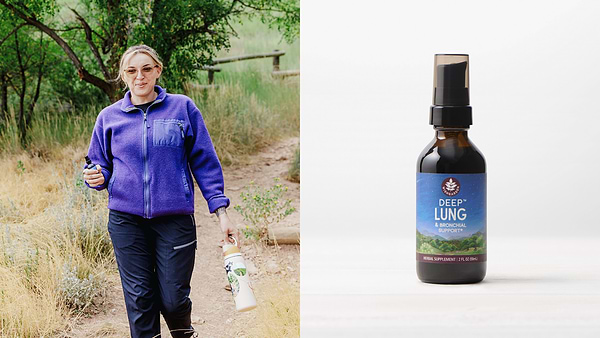
Deep Lung's formula is built around mullein, elecampane, osha, and yerba santa together, the same four herbs from those categories working as a set rather than any one alone.
For ongoing, building support, Respiratory Strength is the steadier route, built to support respiratory health through a whole season rather than just one bad week.
Safety And Sourcing Basics
Always consult a practitioner before taking any herbs, especially if you are pregnant, nursing, taking prescription medications, or have a complicated medical history.
Some herbs can cause stomach upset in high doses, so more isn't always better. Stick to label guidance rather than freelancing your own amount. Drinking plenty of water and reaching for more fluids in general supports the whole process too. Herbs work best alongside good hydration.
Sourcing matters as much as the herb itself, especially with osha. Wild-harvested osha root grows in the same range as poison hemlock, a toxic look-alike, and telling them apart takes a careful look at the roots, seeds, and scent. That's reason enough to buy from a source you trust rather than wild-harvesting osha yourself.
If a cough persists beyond a week or two, gets worse, or comes with a fever, that's worth a call to your healthcare provider rather than reaching for another herb. If you take any medication, bring a written list of everything you take, herbs included, with doses and how often, to your next health care visit.
Building a Real Regimen
Mullein's where most people start, and it's not a bad place to start. It just isn't the whole toolkit. Expectorants move mucus out. Demulcents like mullein soothe irritated tissue. Tonic herbs build capacity for the long haul, supporting your immune and respiratory systems together.
That capacity matters more as winter closes in. Cold air, dry heat, and holiday travel all lean on the same systems that just spent a smoky summer working overtime, and if you're in a city or a wildfire-prone area, your lungs haven't had much of a break at all. Your immune and respiratory systems are about to log some serious hours together, and going in already worn down is a rough way to start.
For now, the place to start is simple: Deep Lung's four-herb blend is a natural next step, or pick up the bundle that adds Respiratory Strength for daily support.
Rebecca Younger is passionate about herbs and women's health. She aspires to plant seeds of inspiration within her community about plant medicine and healthier ways of life. She studied Herbal Medicine at Herbalism Roots in Denver and is a certified Doula through the Matrona Foundation. She is the Brand Communications Specialist at WishGarden Herbs.
For educational purposes only. This information has not been evaluated by the Food and Drug Administration. This information is not intended to diagnose, treat, cure, or prevent any disease, or to sell any product.


